How an Oval Racecourse Shapes the View
Understand how oval racecourse layouts, bends, sightlines, and viewing areas shape what spectators can follow from the rail, grandstand, and course map.
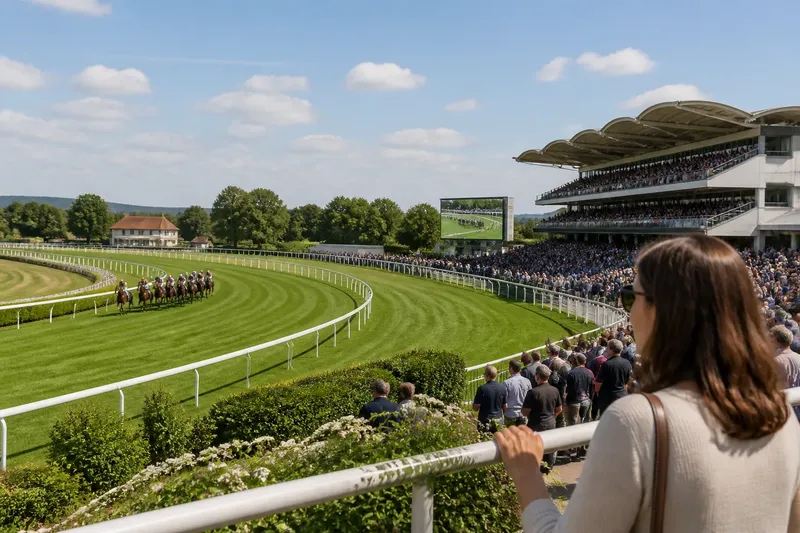
You can watch a runner disappear behind the far bend and reappear with the field stretched out toward the finish. That changing view is part of an oval racecourse: its circuit, turns, rails, and spectator spaces determine which moments are easy to follow and which remain out of sight.
An oval course is a circuit, not necessarily a perfect ring
Oval describes the general route around the track, not a precise geometric shape. A course may be elongated, have unequal straights, or curve more tightly at one end. Some venues also have separate tracks or configurations, so the venue map is more informative than the word “oval” alone.
The circuit gives spectators recurring reference points. The home straight leads toward the finish, while the bends connect it to the sections on the far side. From a grandstand, a spectator may see the finish clearly but lose sight of runners as they travel behind buildings, trees, or the curve of the track.
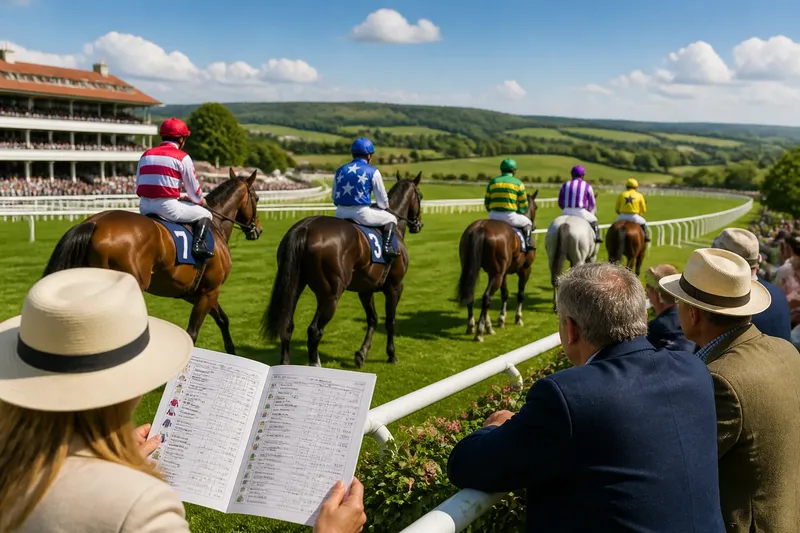
Racecourses also have physical features that shape where people watch: the inner and outer rails mark the course boundaries, the grandstand gathers spectators near the finish, and screens can show action hidden from that viewpoint. These features complement one another rather than creating a single view of the whole race.
Bends and straights change what a spectator can read
A straight offers a relatively direct view of runners moving toward or past a point. On a bend, the field changes angle and may be partly obscured; runners can seem to vanish and then appear closer together as they enter a visible section. Distance affects perception, too: a group on the far side may be difficult to separate even when it is in full view.
The inside rail and the outer part of the course create different sightlines. The rail can help you follow a runner’s position against a fixed boundary, while a wider viewing area may provide a broader angle across the track. What looks clear from one spot may be blocked from another, so a course map should be read alongside signs and the actual viewing layout.
A screen can fill gaps in a live sightline by showing parts of the circuit beyond the grandstand’s view. Watching in person, however, gives a different sense of the field’s movement and the surrounding track. Neither view tells the whole story on its own.
Course features connect the track to spectator areas
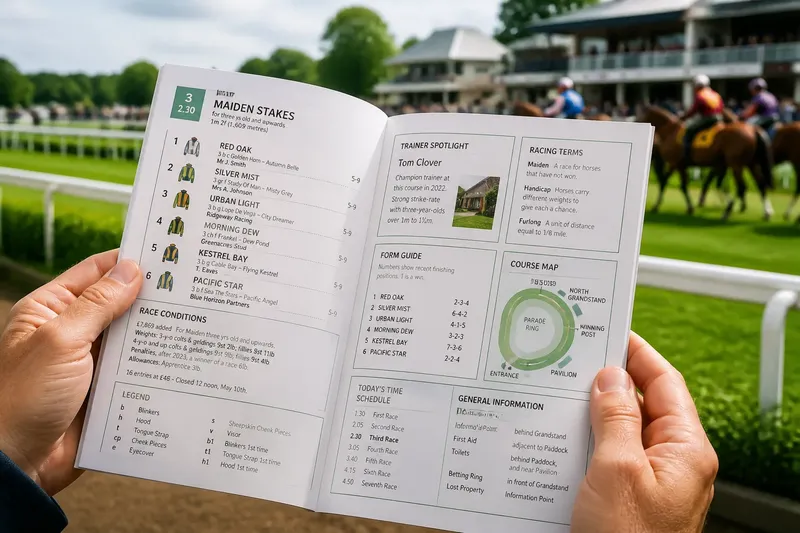
The finish line is a useful starting point when reading an oval course map because it anchors the home straight and the main viewing areas. From there, trace the circuit to see where the bends, entrances, and other public viewpoints sit. A map may simplify the shape, so use it to plan rather than assume it shows every obstruction or permitted route.
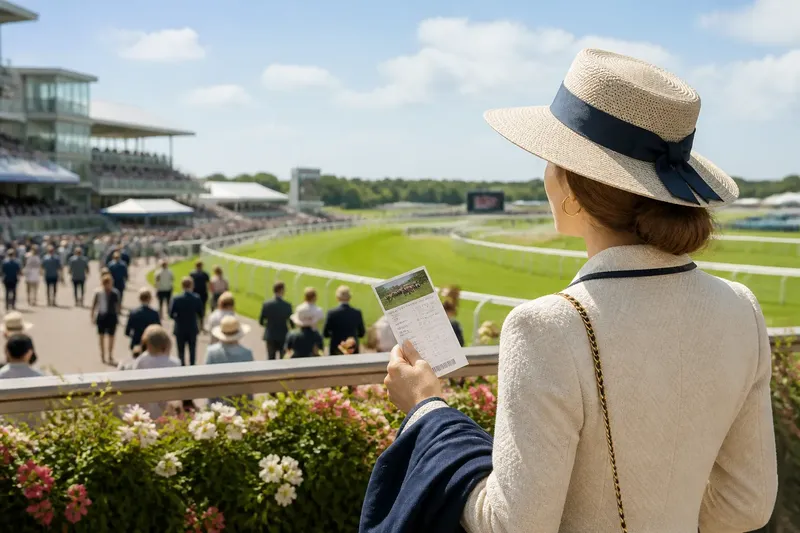
Grandstands, public rails, screens, and walkways serve different purposes. A rail may bring you close to the track but offer a narrow view; a raised public area may reveal more of the course; and a screen may show distant action clearly. Follow venue signs and staff directions, since not every rail or trackside area is open to spectators.
It is not worth trying to find one spot that shows every section without interruption. The bends and venue structures make that unrealistic at many courses, and chasing a perfect sightline can distract from the part of the race you most want to watch.
Choose a viewing place by the moment you want to follow
Before settling in, locate the finish and choose one other point of interest, such as a bend or a stretch visible from a public rail. Check whether a screen covers the sections hidden from that position, and use designated paths if you move between viewing areas.
- Finish line: If the public map marks a permitted area with a direct view of the line, choose it for the closing stages; if barriers block that view, use another signed public spot.
- Home straight: If you want to watch the field approach the finish, check that the grandstand or rail faces the straight; if the angle is poor, look for a permitted position farther along it.
- Bend: If the bend is visible from a public area, use it to follow runners changing direction; if the turn is screened by a structure, choose a different viewpoint or check the course screen.
- Far side: If the map or venue signs indicate that a screen shows the distant section, use it to follow action hidden from the main stand; if no screen is available, focus on a visible part of the circuit.
- Raised viewpoint: If a public viewing area is elevated and open, consider it for a broader view; if it is restricted or crowded, remain in another designated area.
- Moving between spots: If the signed public route connects the areas in time for your next race, follow it; if not, stay put rather than taking an unauthorized shortcut.
Say you arrive at a venue whose hypothetical map shows the finish in front of the grandstand, a bend screened from that stand, and a public rail with a view of the turn. First, you mark the grandstand as your place for the finish. Next, you check the signs and confirm that the rail is a designated viewing area; if it is, you plan to watch the bend there and use the grandstand screen for the hidden section, while if it is closed, you stay at the stand and follow the screen. The resulting plan trades a direct live view of the bend for a lawful, clear place to follow the finish.
What do spectators ask about oval racecourse layouts?
Does an oval racecourse have to be circular?
No. “Oval” describes a circuit that returns toward its starting point, not a perfect circle. Straights and bends can differ in length and shape.
Why do runners disappear around a bend?
The curve changes the viewing angle, and trackside structures or distance may block part of the course. A screen or another designated viewpoint can help fill in that gap.
Can one place show the whole race?
Sometimes an elevated area or screen makes more of the circuit visible, but no single position should be assumed to provide an uninterrupted view. Choose a spot for the moment you care about most and check what the venue map and signs show.
How should I use an oval racecourse map?
Find the finish first, then trace the circuit to locate bends, public viewing areas, screens, and signed paths. Treat the map as a planning aid and follow on-site directions about access.
When reading oval racecourse layouts, connect the circuit on the map to the view from your chosen public area: the finish anchors the plan, while bends and venue features explain what may disappear from sight. Checking the signs for a screen or alternate viewpoint before the race begins can make the hidden stretch easier to follow without leaving your designated spot.